Why Classic Cozy Soft Lights Stay a Favorite for Outside Lights
Exterior lighting patterns come and go. Trendy white had its surge. Color-changing systems attracted focus. App-controlled scenes became a marketing factor. Yet when homeowners go back and ask what actually looks precisely a house, year after year, lots of go back to the very same response: traditional cozy soft lights.
That choice is not fond memories alone. It originates from how homes are built, how materials react after dark, and exactly how people intend to really feel when they pull into the driveway at 6:30 on a wintertime evening or sit on the patio area after sundown in July. One of the most successful outside lights rarely shouts. It works out in, flatters the design, and makes a property really feel finished without looking staged.
After sufficient evenings invested readjusting fixtures, changing shade temperature levels, and standing at the visual with property owners while the sunlight drops, a pattern ends up being noticeable. Cozy light tends to age much better, photo much better, and live better than almost any various other exterior lights choice.
What "timeless warm soft" actually implies outside
People typically use the expression freely, however in practice, timeless cozy soft lights typically drop in the reduced shade temperature array, usually around 2200K to 3000K relying on the application. Theoretically, that sounds technical. In person, it implies the light has a gentle brownish-yellow or golden character as opposed to a crisp blue-white cast.
That distinction matters much more outside than it carries out in a showroom. Several exterior surfaces are textured, matte, uneven, or reflective in uneven ways. Brick, cedar, all-natural rock, repainted trim, stucco, and asphalt roof shingles all react in different ways to synthetic light. Cozy tones tend to take out deepness and soft qualities in those products. Cooler temperature levels typically exaggerate contrast and make surfaces feel flatter or harsher.
A house owner may not state, "The 2700K outcome matches the undertones in the limestone veneer." They are more probable to claim, "That looks like home." That reaction is the real reason these lights endure.
Classic cozy soft lights additionally align with exactly how the human eye expects property rooms to care for dark. Restaurants, friendliness spaces, and premium outdoor living locations discovered this a long period of time earlier. If the goal is convenience, warmth wins.
The emotional side of outside illumination matters greater than most individuals admit
A residence is not a warehouse. It is not a car park framework. Exterior lights for a house does greater than improve visibility. It sets a state of mind prior to anybody reaches the front door.
Warm light creates psychological simplicity. It suggests welcome, calm, and tenancy. That matters in refined means. A softly lit front stroll really feels safer without really feeling interrogated. A back patio area shines rather than blazes. Landscape features become part of the night rather than disappearing right into darkness or being overexposed.

I have actually seen this play out on projects where homeowners initially requested brighter, whiter light since they assumed brighter indicated far better. As soon as mounted, those cooler lamps commonly made the home look even more commercial than domestic. The stone looked cooler. The trim looked sharper, yet not in a lovely method. Darkness came to be harder. When those systems were adapted to warmer lights or warmer LED setups, your home promptly felt extra costly and a lot more comfortable, even though the fixture locations did not change.
That is one of the peaceful facts in this category. Good outside lighting is not just about outcome. It has to do with tone.
Why warmer light flatters architecture
Exterior lighting must support the design, not compete with it. Cozy soft illumination does that particularly well due to the fact that it respects the all-natural visual pecking order of a home.
Traditional homes gain from it most undoubtedly. Colonial, craftsman, farmhouse, Tudor, Mediterranean, and rustic styles all tend to look more grounded under cozy lighting. Rich siding shades, discolored timber doors, copper accents, brick facades, and all-natural stonework all gain deepness under that warmer glow.
Even modern-day homes, which many individuals presume demand cooler whites, typically look better with controlled heat. A clean-lined contemporary residence can still check out as crisp at 2700K. The difference is that it remains welcoming. At 4000K or higher, lots of modern-day homes begin to really feel scientific, particularly if the outside palette currently includes grey stone, charcoal steel, or white stucco.
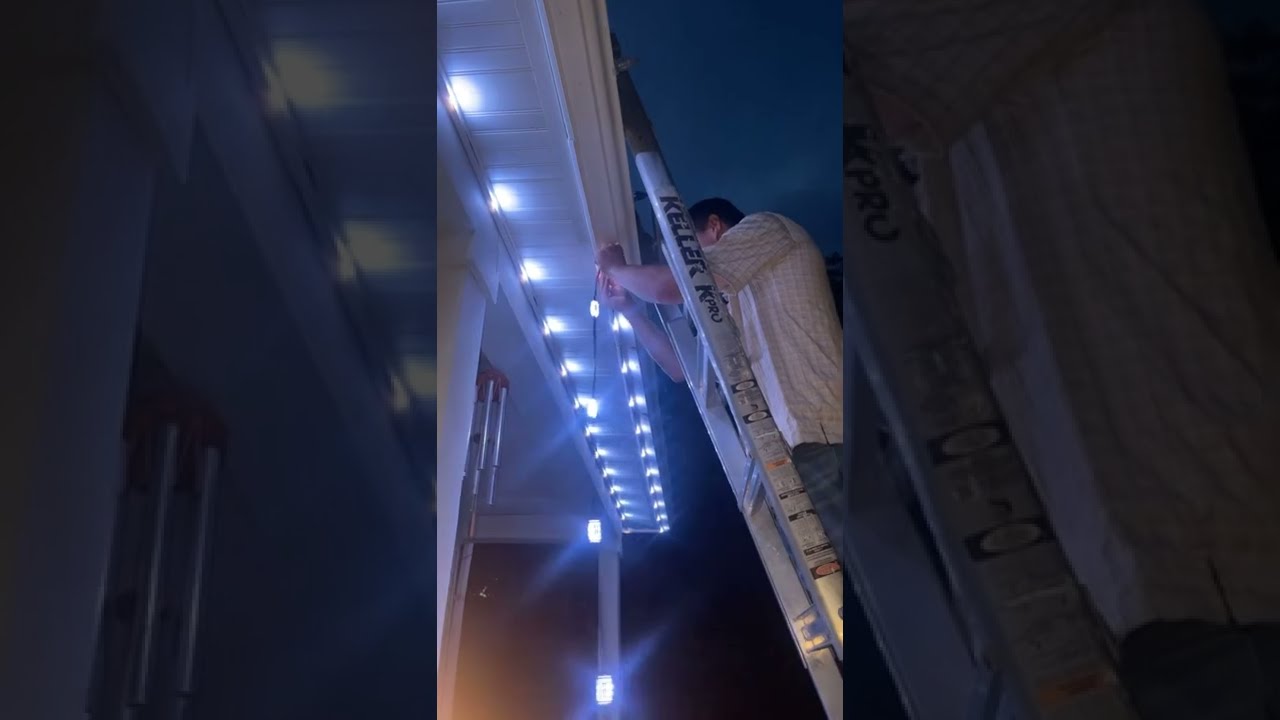
The partnership between light and darkness also boosts with warmer temperature levels. Exterior architecture requires comparison to reveal type, yet not a lot comparison that every column, eave, and soffit looks severe. Warm light tends to soften transitions. It creates dimension without making a house show up overlit.
Curb allure is a nighttime concern too
A lot of house owners invest heavily on landscaping, paint, masonry, and rooflines, after that deal with lighting as a second thought. During the day, your house brings itself. At night, lighting comes to be the architecture people in fact see.
Classic warm soft lights perform particularly well from the street. They develop deepness throughout the exterior and help specify entrances, rooflines, and pathways without transforming the home right into an intense object in a dark area. That balance is one factor they continue to be so preferred for Permanent LED Illumination Installment. House owners desire a system that looks sophisticated on common nights, not simply throughout December celebrations or unique events.
This is where permanent systems have transformed the conversation. Older seasonal configurations generally compelled a selection between functional white bulbs, tinted holiday light bulbs, or no lights whatsoever. Today, Long-term Vacation Lights can run year-round with subtle, warm settings that go away into the style during the day and offer low-profile style during the night. On vacations, they can switch over to more expressive scenes. The key is that their everyday setting typically functions ideal in a classic warm soft tone.
That versatility has made numerous property owners extra familiar with just exactly how habitable cozy outside lights is. Once they see their house softly lit every night without ladders, clips, or yearly configuration, the preference often tends to stick.
Warm light normally looks better on common outside materials
This is one of the least glamorous yet most practical factors for the long-lasting appeal of warm illumination. Most household outsides in The United States and Canada are built from products that benefit from warmth.
Brick is a clear instance. Red, brown, and earth-toned brick can look rich and layered under cozy light. Under cooler light, the same brick can lose its deepness and drift toward a washed-out or muddy look. Natural rock typically acts similarly. Rather than highlighting the variant within the rock, cooler illumination can flatten it or make private cuts appear too stark.
Wood, whether all-natural or discolored, often enhances under cozy illumination. The grain finds out more normally. The coating looks intentional instead of dry. Painted siding, especially creams, beiges, environment-friendlies, and softer blues, additionally often tends to hold its color better under warm light. By contrast, cool white can push a number of those tones right into a grayer, thinner look.
Metal coatings matter also. Bronze, black iron, aged brass, and copper all set naturally with warm light. Those combinations feel systematic since the fixture design and the light shade are telling the very same story.
The best outside illumination is usually the least noticeable
When outside lighting is succeeded, guests usually do not talk about the fixtures first. They discuss the atmosphere. They claim the yard really feels inviting. They see the sidewalk is simple to adhere to. They stop briefly by the front entrance due to the fact that it really feels composed.
Classic cozy soft lights support that kind of reaction due to the fact that they do not call attention to themselves as a modern technology choice. Cooler lights commonly announce themselves promptly. That is not constantly a flaw. There are setups where sharp white light is precisely right, such as safety and security zones, solution areas, or industrial facades. Residential style generally asks for something quieter.
This is particularly true in neighborhoods where homes rest fairly close together. A hostile cool-white system can bleed right into surrounding residential or commercial properties, create glow with home windows, and make a home stick out for the wrong factor. Cozy systems often tend to be easier to regulate visually. They can still offer sufficient lighting for safety and security, yet they do so with much less aesthetic noise.
Where cozy light outmatches trend-driven color choices
Color-changing systems serve. They can celebrate vacations, assistance team colors, or add character for events. There is no factor to disregard them outright. The blunder is assuming that due to the fact that a system can generate numerous shades, it needs to use them often.
Most homes spend the vast bulk of the year in average life. Kids return from college. Plans show up. Pet dogs need walking. Guests stop by for supper. On those nights, saturated color results are generally as well busy. A classic warm soft setting simply fits even more situations.
That is why a lot of the most effective Permanent Vacation Lighting setups are not created as holiday-only products. They are designed as irreversible architectural lighting systems with holiday capacity. The difference issues. If a system just looks great when it is doing something fancy, it will certainly be off the majority of the year. If it looks fine-tuned in a warm white setting every night, it enters into the home.
Homeowners often find this after installation. The shades are enjoyable and worth having. The warm white mode ends up being the default.
The performance situation for cozy lighting
Aesthetic preference gets most of the focus, however there is a sensible side as well. Cozy outside lights can be much easier to deal with since it has a tendency to decrease regarded harshness and glow. That does not indicate reduced outcome or inadequate visibility. It suggests beneficial light routed in a manner that feels comfortable.
Brightness and color temperature are not the very same point, though people frequently treat them as if they are. A well-placed 2700K component can give excellent pathway illumination. A 4000K component of comparable outcome might feel brighter, however it can additionally really feel even more glaring, especially if checked out straight from the road or from a seated outside area.
This issues on porches, outdoor patios, and outside cooking areas where people hang around close to the light. It also matters for older homeowners, that can be more conscious glare and comparison. In those cases, cozy lights commonly develops a more usable outside atmosphere since the eye can relax.
Common situations where timeless warm soft lights make the most sense
There are some applications where warm illumination continually confirms itself. These are the minutes where pattern resistance becomes functional wisdom.
- Front access and decks, where the goal rates, face visibility, and a feeling of arrival
- Rooflines and eaves, particularly in Permanent LED Illumination Setup, where subtle describing looks a lot more polished than sharp white tracing
- Patios, pergolas, and seating areas, where glare control and convenience matter as much as visibility
- Landscape uplighting on trees, stone, and planting beds, where cozy tones disclose texture beautifully
- Historic or character-rich homes, where cooler temperatures usually combat the architecture
Those are not the only applications, yet they are the ones where homeowners hardly ever regret picking warm.
That stated, cozy is not constantly the answer
Professional judgment indicates recognizing the edge cases. Some properties take advantage of a split technique as opposed to a single shade temperature level everywhere.
Security lighting around side backyards, garage work areas, garbage rooms, or utility areas may require extra neutral or somewhat cooler light for quality and job exposure. Coastal modern-day homes with really light surfaces often take care of a controlled 3000K establishing far better than an ultra-warm 2200K tone. Snow-heavy regions can also transform assumption. Light reflected off snow appears brighter and cooler to the eye, so a temperature level that looks excellent in summer season might require dimming adjustments in winter.
There is also the concern of over-warming. Extremely amber light can begin to really feel theatrical if it is also solid or applied everywhere. The goal is softness, not sepia. In many residential settings, the sweet spot is a well balanced cozy white, not an overstated vintage effect.
Good exterior illumination style addresses these problems by treating the home as a composition. The front facade, paths, entertaining spaces, and service locations might each require various outcomes or component shielding, also if they remain within a typically warm palette.
Why permanent systems have strengthened the popularity of warm tones
The surge of Permanent LED Lights Installation has transformed property owner assumptions. People no longer see roofline lights as a short-lived seasonal expenditure. They see it as part of the home. That shift naturally prefers traditional warm soft lights because irreversible layout asks a harder inquiry than seasonal design: will certainly this still look excellent in February, April, August, and November?
Warm lighting passes that examination better than practically any kind of alternative.
Permanent systems likewise award restraint due to the fact that they are visible all year. The most effective installments hide the tracks well, preserve the architecture, and offer adequate control to shift from refined day-to-day scenes to holiday shows when desired. In those systems, cozy white is the setting that verifies the financial investment was beneficial. It is the mode that makes the house really feel polished on a regular Tuesday.
I have listened to house owners state virtually the very same point in different words: "We bought it for the vacations, but we keep it on for the remainder of the year." That sentence explains the enduring power of cozy exterior illumination better than any kind of fad record could.
A couple of blunders that make cozy lighting appearance worse than it should
Warm light is forgiving, but it still needs correct implementation. Several disappointing outcomes originate from style errors, not from the shade temperature itself.
- Too much brightness, which rinses the soft qualities and produces glare
- Poor fixture positioning, specifically uplights aimed too directly at windows or seating areas
- Mixing unassociated lamp colors, such as cozy exterior lights with cool garage floods
- Cheap LEDs with weak shade making, which can make surface areas look boring or off
- Lack of lowering control, which requires one light level for every single season and usage case
These problems prevail, and they are fixable. In several tasks, the distinction between "great" and "excellent" is not a brand-new component. It is lower output, far better aiming, or a much more systematic illumination plan.

The role of shade rendering and why it frequently obtains overlooked
Color temperature gets the majority of the discussion because it is very easy to see and easy to market. Shade making issues equally as much. A cozy fixture with bad color making can still make rock, plants, and paint look drab. A top notch cozy LED, on the various other hand, discloses refined tones that make a residential property look more expensive.
This is one reason bargain components disappoint. They might promote the right warmth, however the actual visual result can be muddy. Skin tones at the front entry look less all-natural. Plants lose variation. Timber tones appear flatter than they should.
For house owners purchasing Permanent Holiday Lights or a more comprehensive Permanent LED Lighting Installation, this matters gradually. If the lights get on nearly every night, small visual shortcomings come to be really obvious. High quality is not nearly long life or app functions. It is additionally about whether the light itself really feels good to live with.
Why cozy light pictures well, but much more notably, why it lives well
Homeowners frequently see outside illumination first in detailing photos, designer profiles, or social media sites clips. Cozy light often tends to photo magnificently because it produces comparison, highlights https://permanentsetupplan572.quantlynix.com/posts/exactly-how-long-term-holiday-lighting-simplify-decorating-while-enhancing-home-worth texture, and gives the home a complementary radiance. However the genuine test is not an image. It is daily life.
A lighting scheme can look remarkable in an expert image and still be unpleasant at 9 p.m. When somebody is securing the recycling or taking pleasure in a peaceful beverage on the porch. Cozy lights makes it through that examination. It is less complicated on the eyes, more versatile to family routines, and less most likely to feel dated after the novelty fades.
That resilience is a major factor traditional cozy soft lights remain a favored. They are not simply photogenic. They are livable.
What homeowners should ask before selecting an exterior illumination system
When reviewing outside illumination, homeowners usually focus on fixture style or app features first. Those are important, but the deeper concerns normally lead to a far better result.
Ask just how your home need to feel at night. Ask which architectural details are worthy of focus and which should recede. Ask whether the lights is suggested for entertainment, everyday curb allure, security, or all three. Ask what the residential property looks like in wet weather condition, in winter months, and from the street as opposed to just from the front steps.
For permanent systems, it is likewise worth asking exactly how often the color-changing attributes will reasonably be made use of compared with a warm everyday setting. That response aids different uniqueness from value.
The homes that age best under outside lights are generally the ones that select eternity initially and flexibility 2nd. Timeless cozy soft lights fit that order naturally. They respect products, assistance architecture, and produce a sort of nighttime existence that still feels best years later.
Trends can make a house recognizable. Cozy light makes it memorable.